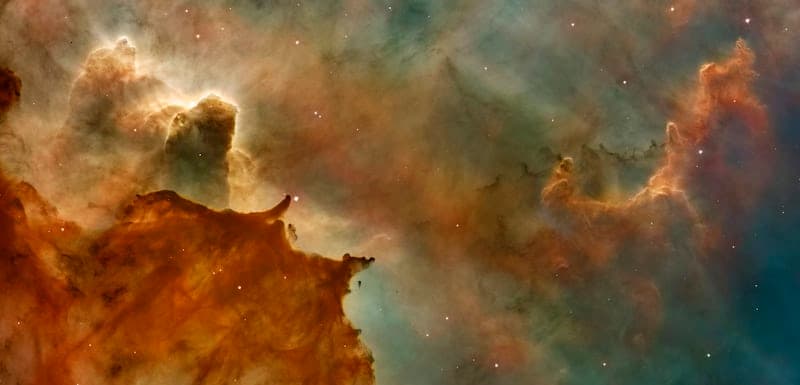
Learn about astronomy
Dive into planets, galaxies, and cosmic phenomena—the universe is vast and endlessly fascinating to explore.
- Time:
- 60 min
- Cost:
- free
- Difficulty:
- moderate
- Where:
- Indoors
- Best:
- Solo
To learn about astronomy as a science is a different hour from learning to find things in the sky. This one is about what you are actually looking at: how far away it is, what is happening inside it, and the fact that every point of light you see is an image of the past rather than the present.
Why learn about astronomy is worth an hour
Scale is the concept that reorganizes everything else, and it is genuinely difficult to hold. Scale models help where numbers do not: if the sun is a football, the earth is a peppercorn twenty-five meters away. Once distance becomes intuitive, light-travel time follows naturally, and with it the strange fact that the night sky is a composite of many different moments.
How to learn about astronomy step by step
- 1
Build a scale model of the solar system
Use an online calculator or pace it out. Almost everyone is wrong about the emptiness by orders of magnitude.
- 2
Understand what a light year measures
A distance, not a time, though it implies one. Looking at a star a thousand light years away shows you a thousand years ago.
- 3
Learn what stars are doing
Fusion, balance between gravity and pressure, and different fates by mass. This explains almost all stellar variety.
- 4
Place the sun in context
An ordinary star, in an ordinary position, in one of an enormous number of galaxies. The mediocrity is the point.
- 5
Look up something observed this year
Astronomy moves fast. A recent discovery connects the abstract material to work happening now.
Tips to get more out of it
- Prefer sources from observatories and universities. The subject attracts a great deal of confident nonsense.
- Ignore astrology entirely; it is unrelated to astronomy despite sharing some vocabulary.
- If a concept will not settle, find a visualisation. Scale and time in this subject resist verbal explanation.
Ways to mix it up
If you would rather observe than read, learning to find things in the sky is the natural companion hour. If the physics interests you most, spend the time on stellar life cycles specifically, which is the most self-contained and satisfying part of the subject.
Learn about astronomy: frequently asked questions
What is a light year?
The distance light travels in a year. It is a measure of distance, though it also tells you how old the image you see is.
Do I need equipment to learn astronomy?
Not for the science. A telescope helps with observing, but understanding scale, stars and galaxies requires only reading.
Is astronomy the same as astrology?
No. Astronomy is the scientific study of objects in space; astrology is unrelated and has no predictive basis.
Related activities
Learning
Learn about constellations and stargaze
Study star charts or use a sky map app to identify constellations, then head outside to spot them for real.
Outdoor
Go stargazing in a dark area
Head somewhere with minimal light pollution, look up, and marvel at constellations, planets, and the Milky Way.
Learning
Watch a documentary on a brand-new topic
Pick a documentary about something you know nothing about and let it open a door.