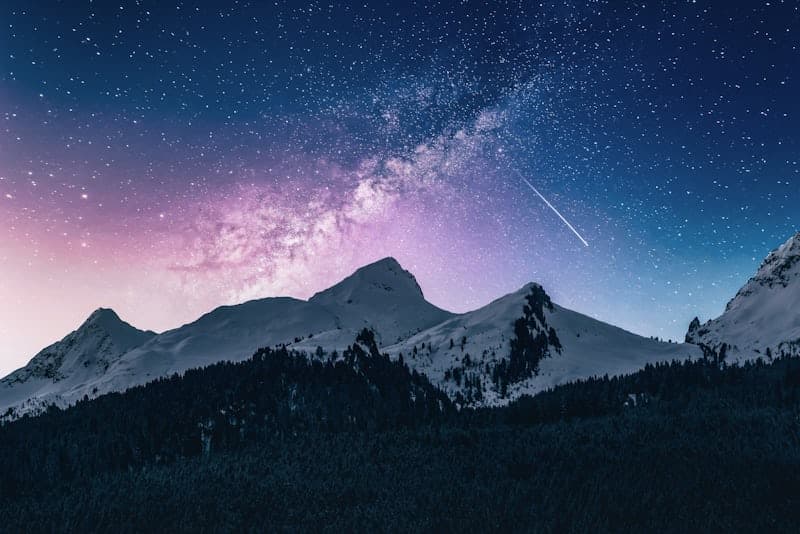
Go stargazing in a dark area
Head somewhere with minimal light pollution, look up, and marvel at constellations, planets, and the Milky Way.
- Time:
- 60 min
- Cost:
- free
- Difficulty:
- easy
- Where:
- Outdoors
- Best:
- Solo
To go stargazing in a dark area is mostly a logistics problem rather than an astronomical one. Getting away from streetlights, timing it around the moon, and then leaving your eyes alone for twenty minutes accounts for almost all the difference between an unimpressive night and a genuinely startling one.
Why go stargazing in a dark area is worth an hour
Dark adaptation is a chemical process in the eye that takes around twenty minutes to complete and a couple of seconds of white light to undo. This is why a red torch is standard and why checking your phone ruins the next twenty minutes. Moon phase matters almost as much: a full moon is bright enough to wash out everything faint.
How to go stargazing in a dark area step by step
- 1
Check the moon phase first
Aim for close to new moon. A bright moon washes out everything faint regardless of how dark your site is.
- 2
Get away from direct lighting
Even a modest distance from streetlights transforms what is visible. A light pollution map shows where to go.
- 3
Give your eyes twenty minutes
No phone, no white light. This single discipline does more than any equipment you could buy.
- 4
Use a red torch only
Red light preserves dark adaptation. A phone screen at full brightness resets the entire process instantly.
- 5
Dress far warmer than expected
You are standing still for an hour, often after midnight. Cold is what ends most stargazing sessions early.
Tips to get more out of it
- Take a reclining chair or a mat. Standing with your head tilted back becomes uncomfortable within minutes.
- Binoculars beat a cheap telescope for a first session. Wide field of view makes finding things far easier.
- Tell someone where you are going. Remote dark sites are, by definition, away from people.
Ways to mix it up
If you want to know what you are looking at, learning to find patterns and hop between them is the natural companion. If you want the underlying science of scale and stellar physics, that is a separate and equally rewarding hour indoors.
Go stargazing in a dark area: frequently asked questions
How long does dark adaptation take?
Around twenty minutes, and a couple of seconds of white light undoes it. This is why red torches are standard.
When is the best time to stargaze?
Near new moon, on a clear night, well away from streetlights. Moon phase matters as much as site darkness.
Do I need a telescope?
No. Binoculars are better for a first session, and dark adaptation at a dark site does more than any equipment.
Related activities
Learning
Learn about constellations and stargaze
Study star charts or use a sky map app to identify constellations, then head outside to spot them for real.
Learning
Learn about astronomy
Dive into planets, galaxies, and cosmic phenomena—the universe is vast and endlessly fascinating to explore.
Outdoor
Watch the sunrise or sunset outdoors
A sunrise or sunset outing needs a suitable viewing spot, the local time for your chosen date and a safe way home.