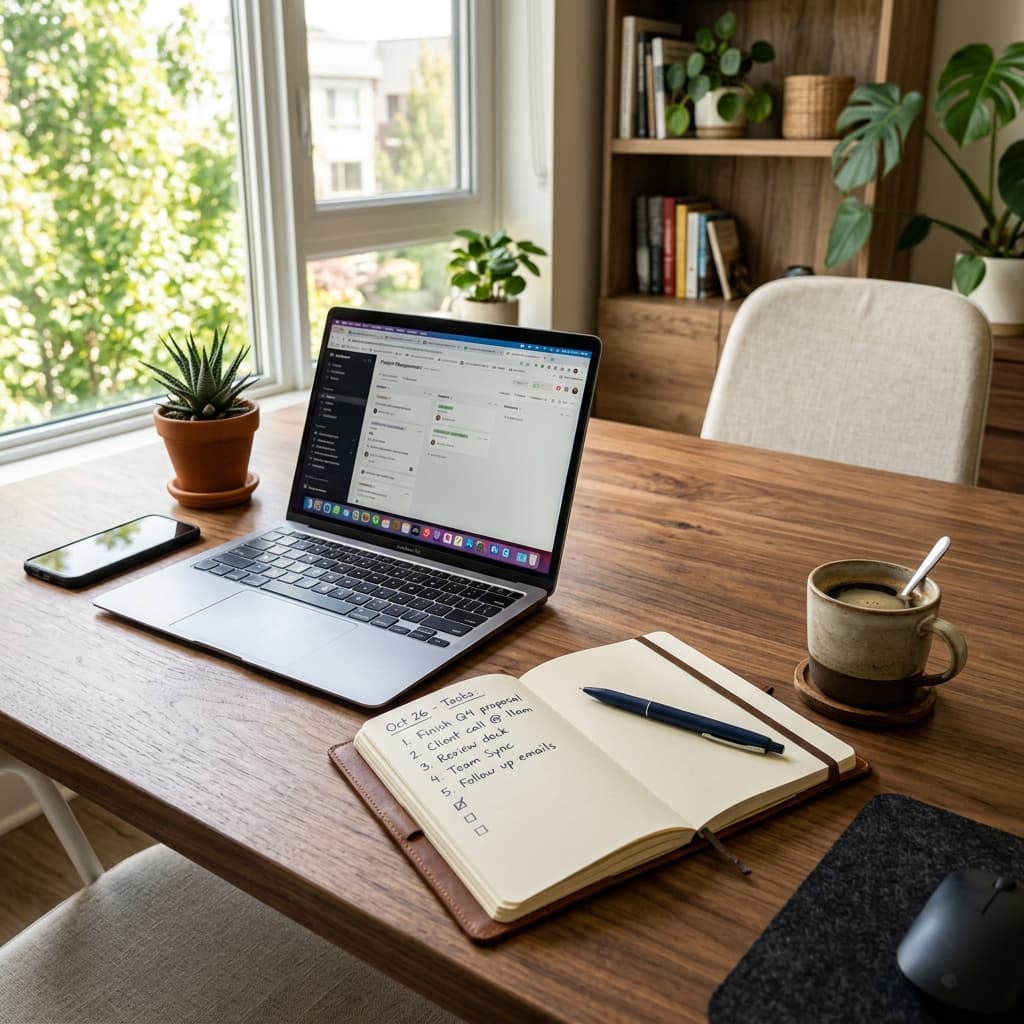
Learn to take better meeting notes
Pick up a simple note-taking method that captures decisions and actions, not transcripts.
- Time:
- 30 min
- Cost:
- free
- Difficulty:
- easy
- Where:
- Indoors
- Best:
- With others
Taking better meeting notes usually means writing considerably less. Transcription feels productive and produces documents nobody opens. What people actually need afterwards is three things: what was decided, who owns what, and what remains unresolved. Capturing only those takes less effort during the meeting and produces something worth rereading.
Why learn to take better meeting notes is worth an hour
Notes that record discussion require you to listen and transcribe simultaneously, which degrades both. Listening for decisions instead is a filtering task rather than a capture task, so it leaves attention available to actually participate. The output is also shorter, which is the difference between notes that get read and notes that get archived unread.
How to learn to take better meeting notes step by step
- 1
Use three headings only
Decisions, actions, open questions. Set them up before the meeting starts so you are sorting rather than writing.
- 2
Write a name next to every action
An action without an owner does not happen. If nobody is named, ask before the meeting ends.
- 3
Capture decisions, not discussion
What was concluded and why, in one line. The debate that preceded it is almost never needed later.
- 4
Log unresolved questions explicitly
These are the most valuable and least recorded item, because they are what stalls the project next week.
- 5
Send within the hour
Notes sent the next day are already superseded by half-remembered versions. Same-day sending is what makes them authoritative.
Tips to get more out of it
- Read the actions aloud in the last two minutes. Disagreement about who owns what surfaces immediately.
- Keep a running decision log across meetings. The question of why something was decided recurs constantly.
- If a transcription tool is recording, use it for recall and still write the decisions yourself. Filtering is the value.
Ways to mix it up
If you chair the meeting, delegate the notes and focus on running it, since doing both badly is the common outcome. If the meeting is a one-to-one, keep a shared running document instead, which builds context over time in a way separate notes cannot.
Learn to take better meeting notes: frequently asked questions
Should I write down everything that was said?
No. Transcripts are rarely reread. Capture decisions, owners and open questions, which is what people actually need afterwards.
Who should take the meeting notes?
Ideally not the person running the meeting. Chairing and note-taking compete for the same attention and both suffer.
How quickly should notes be sent?
Same day, ideally within the hour. After that, people's own recollections have already diverged and become fixed.
Related activities
Skills
Learn Markdown for faster note-taking
Spend 20 minutes learning Markdown and format notes and documents at the speed of typing.
Skills
Practice active listening techniques
Active listening practice means giving someone room to speak, checking what you understood and asking a useful follow-up question.
Skills
Learn project management fundamentals
Get to grips with scoping, milestones, and prioritization — useful far beyond the office.