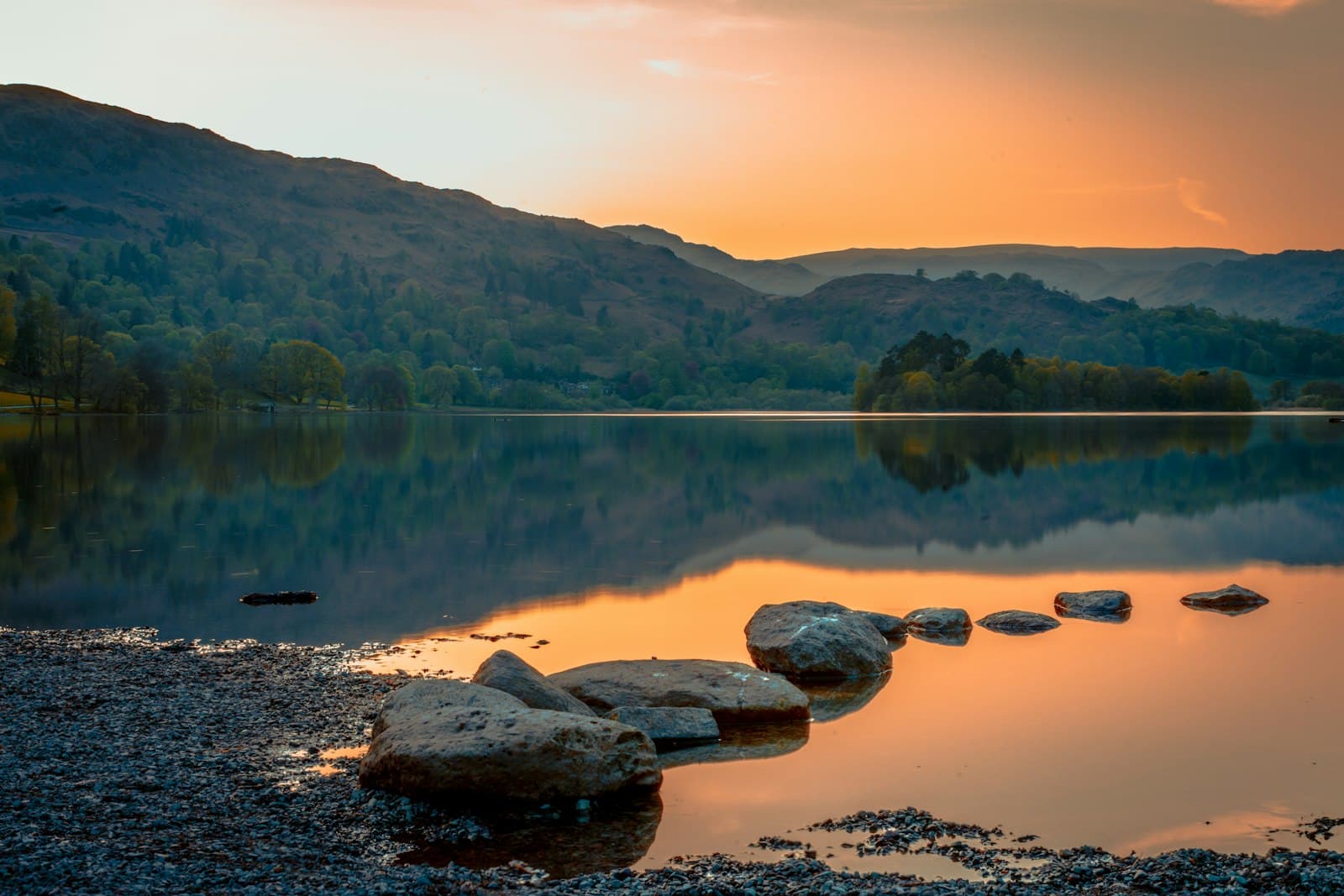
Skim stones at a lake or river
Hunt for the flattest stones and chase that satisfying multi-bounce skim across the water.
- Time:
- 30 min
- Cost:
- free
- Difficulty:
- easy
- Where:
- Outdoors
- Best:
- Solo
Stone skimming looks like luck and is not. There is a genuinely optimal technique, studied by people with high-speed cameras, and it comes down to a flat stone thrown fast and low with plenty of spin, striking the water at roughly twenty degrees. To skim stones at a lake or river well is a matter of copying that.
Why skim stones at a lake or river is worth an hour
The stone bounces because its underside deflects water downward, and the angle determines whether it skips or dives. Around twenty degrees is the sweet spot. Spin is what keeps the stone at that angle through the flight, exactly as a spinning frisbee stays level, which is why a wobbling stone loses its attitude and stops after one bounce.
How to skim stones at a lake or river step by step
- 1
Choose a flat stone with some weight
Roughly palm sized, flat, with a slightly rounded edge. Too light and the wind takes it.
- 2
Hold it along your index finger
Thumb on top, index finger curled around the edge. That finger is what imparts the spin.
- 3
Throw low and fast
Almost sidearm, close to the water. Height is wasted energy; speed and lowness are what matter.
- 4
Flick the wrist for spin
The snap at release is the whole technique. Spin keeps the stone level through the flight.
- 5
Aim for a shallow angle
Around twenty degrees to the surface. Too steep and it dives, too flat and it loses energy immediately.
Tips to get more out of it
- Calm water skims far better than choppy. Wind ripples break up the bounce almost immediately.
- Check what is under and beyond the water first. Swimmers, wildlife and shallow rocks all matter.
- Avoid disturbing nesting birds on shorelines, particularly in spring.
Ways to mix it up
If you want to compete with yourself, count bounces rather than distance; they measure different things and bounce counts improve faster. If the shore has no flat stones, this is one of the few activities genuinely defeated by the wrong location, so try somewhere else.
Skim stones at a lake or river: frequently asked questions
What is the best angle to skim a stone?
Around twenty degrees to the water surface. Steeper and it dives; flatter and it loses energy on the first contact.
What makes a good skimming stone?
Flat, roughly palm sized, with a little weight to it. Very light stones are pushed off course by wind.
Why does my stone only bounce once?
Usually insufficient spin or too steep an entry angle. The wrist flick at release is what keeps the stone level.
Related activities
Outdoor
Collect natural treasures for a display
A nature display can use photographs, drawings and a few fallen objects collected where permission allows.
Outdoor
Fly a kite in an open field
Feel the tug of the wind and the simple joy of keeping a kite dancing in the sky.
Outdoor
Have a picnic in a scenic spot
Pack your favorite snacks and a blanket, find a beautiful outdoor setting, and enjoy a relaxing meal in the open air.