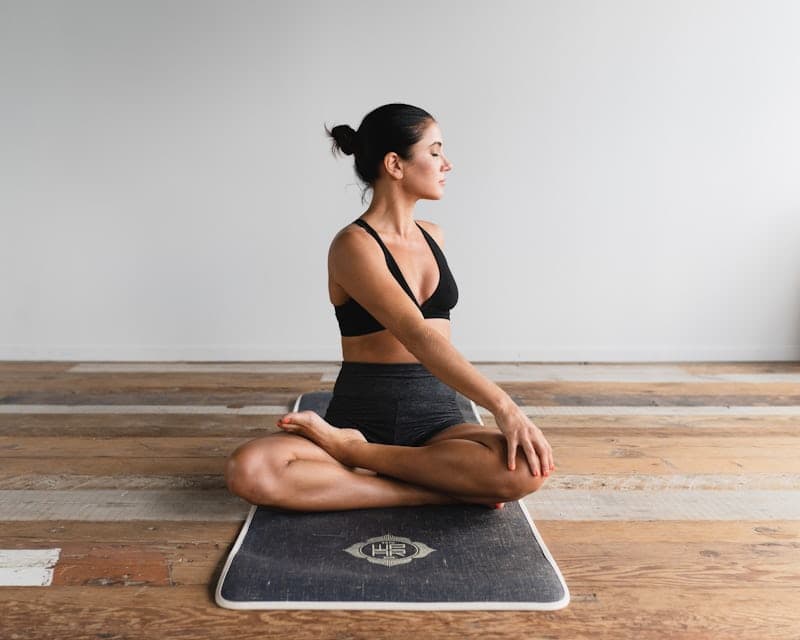
Practice progressive muscle relaxation
Systematically tense and release each muscle group from head to toe to melt away physical tension and stress.
- Time:
- 20 min
- Cost:
- free
- Difficulty:
- easy
- Where:
- Indoors
- Best:
- Solo
To practice progressive muscle relaxation you deliberately tense a muscle group, hold briefly, then release and notice the difference. The tensing seems counterproductive and is the whole point: it creates a contrast that makes the relaxed state perceptible in a way that simply trying to relax does not.
Why practice progressive muscle relaxation is worth an hour
You cannot relax a muscle you cannot feel, and chronically tense muscles have usually stopped registering. Tensing deliberately restores the sensation, and the release afterwards is felt against that fresh reference point. Working systematically through the body also catches areas you would never have thought to check, which is where most held tension turns out to be.
How to practice progressive muscle relaxation step by step
- 1
Lie or sit comfortably
Somewhere you will not be interrupted for fifteen minutes. Warm, supported and undisturbed.
- 2
Start at the feet and work up
Feet, calves, thighs, abdomen, hands, arms, shoulders, face. A fixed order means nothing is skipped.
- 3
Tense for about five seconds
Firmly but not to the point of cramp or pain. Five seconds is enough to establish the sensation.
- 4
Release suddenly, not gradually
A complete letting go. The abruptness is what makes the contrast noticeable.
- 5
Pause and notice for ten seconds
Before moving on. The noticing is the actual exercise; the tensing was only preparation for it.
Tips to get more out of it
- Skip any area that is injured or currently painful. Never tense through pain, and move on to the next group instead.
- The face and jaw hold considerably more tension than most people expect, and are usually the most striking part of the whole sequence.
- If you have a muscular or cardiovascular condition, check with a doctor before using this regularly.
Ways to mix it up
If fifteen minutes is too long, a short version covering hands, shoulders, jaw and feet takes four minutes and catches the main tension sites. If you want it for sleep, do it in bed and simply stop when you drift off rather than finishing the sequence.
Practice progressive muscle relaxation: frequently asked questions
Why tense a muscle to relax it?
The contrast makes the relaxed state perceptible. Chronically tense muscles have usually stopped registering as tense at all.
How long should I hold each contraction?
About five seconds, firmly but never to the point of pain or cramp. Then release suddenly rather than gradually.
Is it safe with an injury?
Skip any injured or painful area entirely. Check with a doctor first if you have a muscular or cardiovascular condition.
Related activities
Mindfulness
Try a guided body scan meditation
Follow an audio guide that directs your attention through each body part to release tension and deepen relaxation.
Mindfulness
Practice deep breathing exercises
Try box breathing or 4-7-8 breathing to calm your nervous system, lower stress, and improve focus in minutes.
Health & Fitness
Create a sleep improvement plan
Audit your sleep habits and pick two evidence-based changes to try this week.