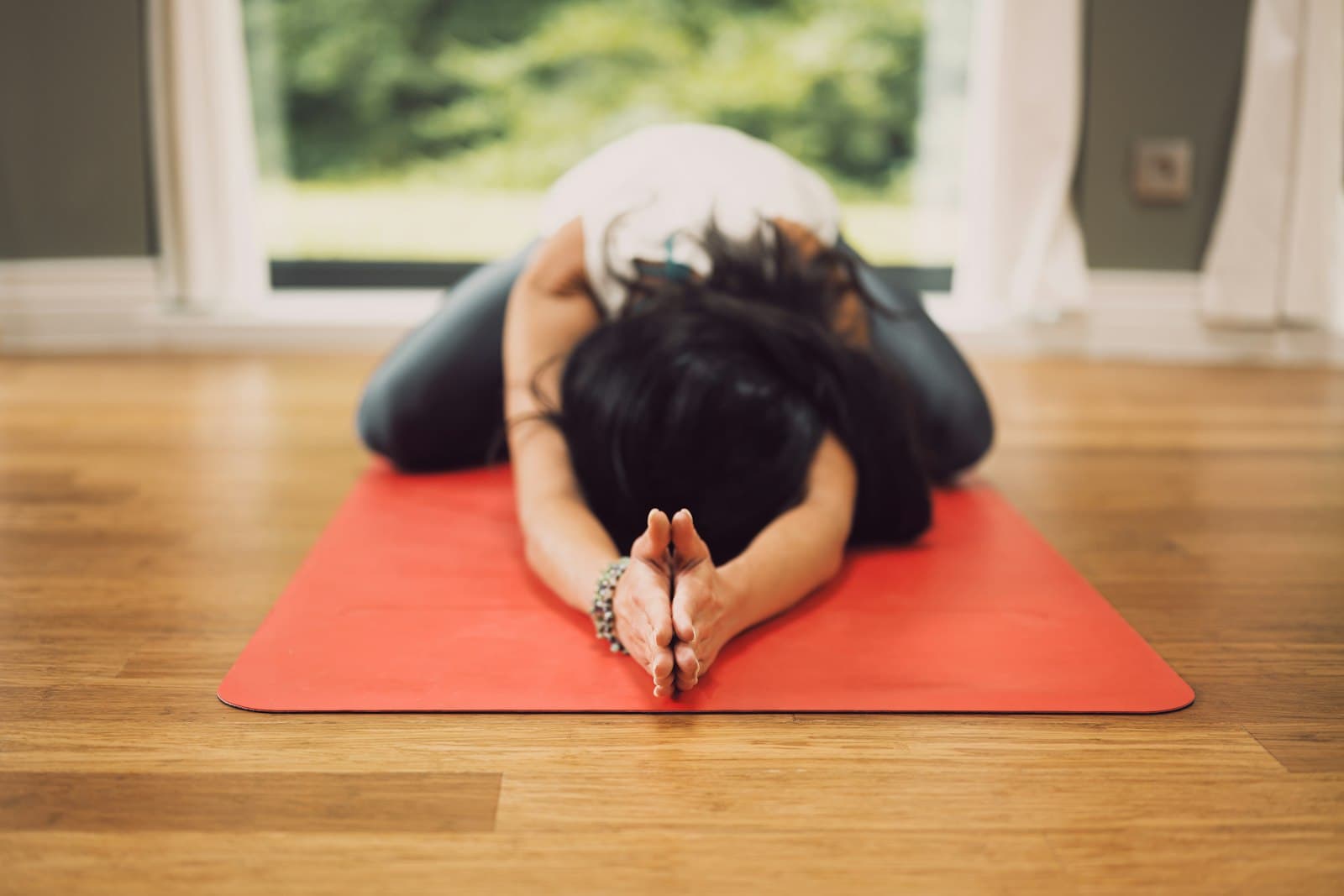
Do gentle stretching with slow breathing
Pair slow, deep breaths with gentle stretches and feel the tension melt away.
- Time:
- 20 min
- Cost:
- free
- Difficulty:
- easy
- Where:
- Indoors
- Best:
- Solo
Gentle stretching with slow breathing is a different activity from a flexibility session. Nothing is being trained and no range is being extended. The breath sets the pace, each exhale allows a small settling, and the aim is release rather than progress. Treating it as a workout defeats it entirely.
Why do gentle stretching with slow breathing is worth an hour
Muscles resist being forced and yield gradually when they are not. Letting the exhale rather than the clock govern how deep you go means you never push past that resistance, which is what keeps the nervous system settled instead of activated. Holding your breath, by contrast, increases tension in exactly the tissue you are trying to soften.
How to do gentle stretching with slow breathing step by step
- 1
Start with a few slow breaths
Before moving at all. Establish the breathing rhythm first and let the movement follow it.
- 2
Move into position on an exhale
Only to where you first feel gentle tension. Not to your maximum range.
- 3
Let each exhale settle you deeper
Without pushing. If nothing releases, stay where you are; that is a complete outcome.
- 4
Keep breathing throughout
Breath-holding is the commonest error and it directly increases tension where you want less of it.
- 5
Come out slowly
On an exhale, in your own time and without rushing. Snapping out of a position undoes most of what the holding achieved.
Tips to get more out of it
- Evening suits this considerably better than morning, since the aim is settling down rather than preparing for activity.
- Warmth helps considerably here. A warm room, or stretching after a shower, makes everything yield much more easily.
- This is not the practice for building flexibility, and it is certainly not a substitute for medical advice about persistent pain.
Ways to mix it up
If you want to increase range of motion rather than settle, longer static holds after exercise is the appropriate approach. If you would rather follow along, a guided session removes the decisions and works well for this purpose.
Do gentle stretching with slow breathing: frequently asked questions
How is this different from normal stretching?
The breath sets the pace rather than a timer, and the aim is release rather than increased range of motion.
How deep should I go?
Only to gentle tension, letting each exhale settle you further if it wants to. Never force a position.
When is the best time to do it?
Evening, or whenever you want to settle rather than prepare for activity. Warmth makes everything yield more easily.
Related activities
Health & Fitness
Do a guided stretching session
Follow a guided full-body stretch routine and release the tension you didn't know you were holding.
Health & Fitness
Learn proper stretching techniques
Static stretching means gently holding a position; dynamic movement means moving through a comfortable range.
Mindfulness
Practice progressive muscle relaxation
Systematically tense and release each muscle group from head to toe to melt away physical tension and stress.