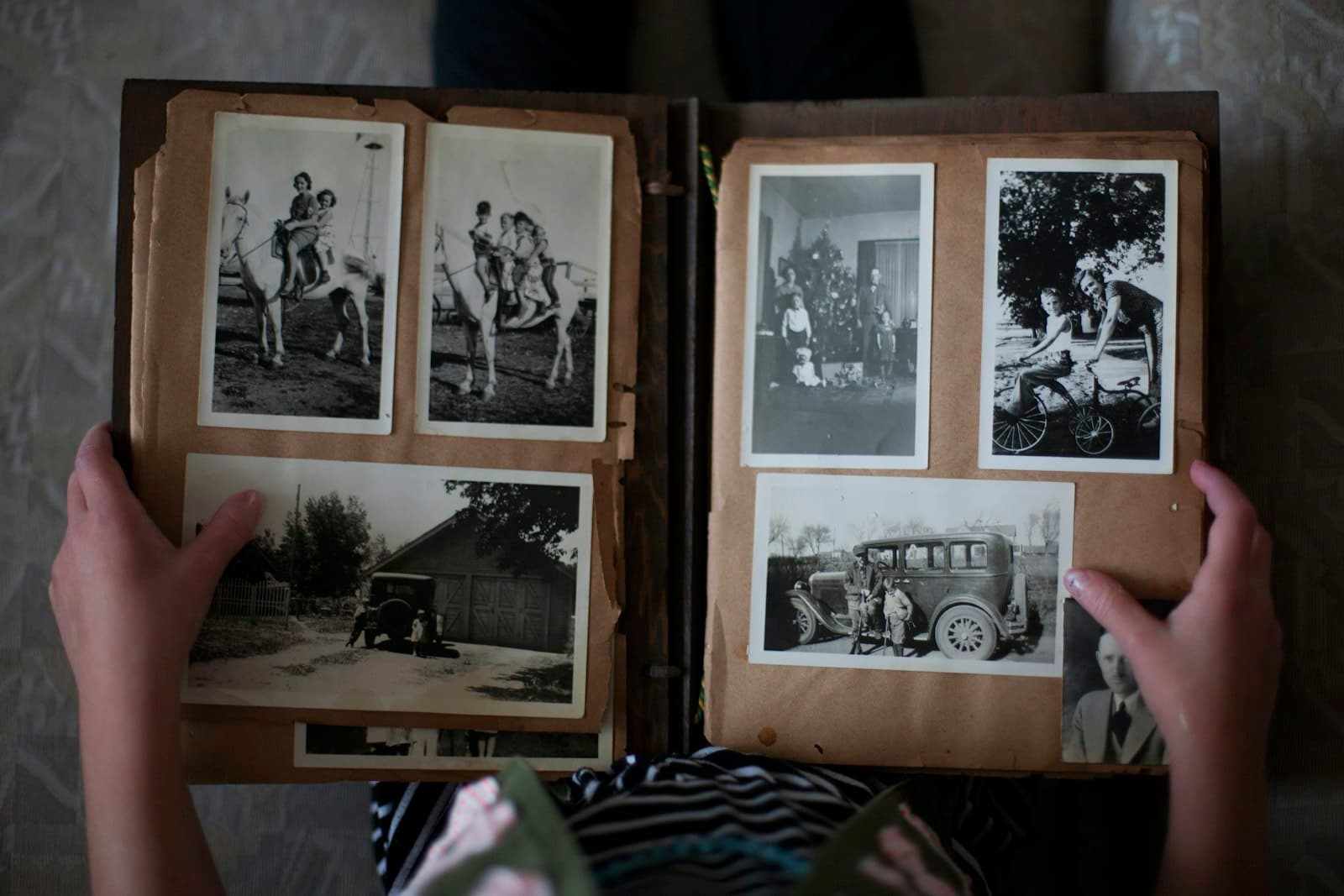
Start Your Family Tree Online: Records and Questions
Start a family tree with information you already know, then look for records that support it.
- Time:
- 60 min
- Cost:
- free
- Difficulty:
- moderate
- Where:
- Indoors
- Best:
- Solo
Start a family tree with information you already know, then look for records that support it. Write names, approximate dates and places, keeping uncertainty visible. Ask relatives only about information they are comfortable sharing, and keep details about living people private unless they consent to publication.
Research one person rather than a whole tree
Choose a relative and list what you know and where each detail came from. Search an archive or family-history service for a matching record, checking its current access terms. Compare names, dates, addresses and family relationships: a similar name is not enough to establish a match.
Record the source title, reference and what it actually says. Label tentative connections instead of silently adding them as fact. If a record conflicts with family memory, keep both versions and investigate. Save permitted copies and avoid publishing sensitive personal details.
Why explore your family tree online is worth an hour
Genealogy is a chain, and one wrong link invalidates everything beyond it. Verifying each generation against a primary record before moving to the next is slower and produces a tree that is actually yours. Starting with relatives also captures information that exists nowhere else and disappears permanently, which makes it the genuinely urgent part.
How to explore your family tree online step by step
- 1
Write down what you already know
Names, dates, places for yourself, parents and grandparents. This is your foundation and it must be right.
- 2
Ask living relatives first
Names, nicknames, places and stories. Older relatives hold information that exists in no archive anywhere.
- 3
Work backwards one generation at a time
Never jump. Every leap is where trees go wrong, usually by attaching a same-named stranger.
- 4
Verify with primary records
Census, birth, marriage and death records. Another person's online tree is a hint, not evidence.
- 5
Record your sources as you go
Which record, which year, which reference. Unsourced trees cannot be checked or corrected later.
Tips to get more out of it
- Spelling was wildly inconsistent historically. Search phonetically, and expect to find the same family recorded several different ways.
- Free resources are more extensive than most people expect. Try them before paying anything, particularly national archives and volunteer transcription projects.
- Be prepared for surprises. Genealogy regularly turns up things families did not discuss, and DNA testing more so.
Ways to mix it up
If your family emigrated, focus the hour on passenger lists and naturalization records, which are often the hardest link and the most rewarding. If relatives are elderly, prioritize recording their memories over any archival research; the archives will still be there.
For more ideas, browse learning activities.
Another activity to try is learn about local history.
Explore your family tree online: frequently asked questions
Can I research a family tree for free?
You can begin with family information and freely accessible records, but some services and copies charge fees. Check access terms and use local archive or library guidance for the records you need.
Where should I start with genealogy?
With yourself and living relatives, working backwards. Starting from a distant famous ancestor almost always produces someone else's tree.
Do I need to pay for a genealogy site?
Not initially. National archives and volunteer transcription projects hold a great deal for free.
Can I trust other people's online trees?
Treat them as hints requiring verification. Many contain errors that have been copied between trees for years.
Related activities
Social
Interview an older relative about their life
Ask a parent or grandparent about their childhood and record the stories before they're lost.
Learning
Learn about local history
Research the stories behind landmarks, street names, and events in your area—you'll see your neighbourhood differently.
Organization
Digitize important paper documents
To digitise paper documents, scan readable copies, give them consistent names and store them somewhere you can back up and search.