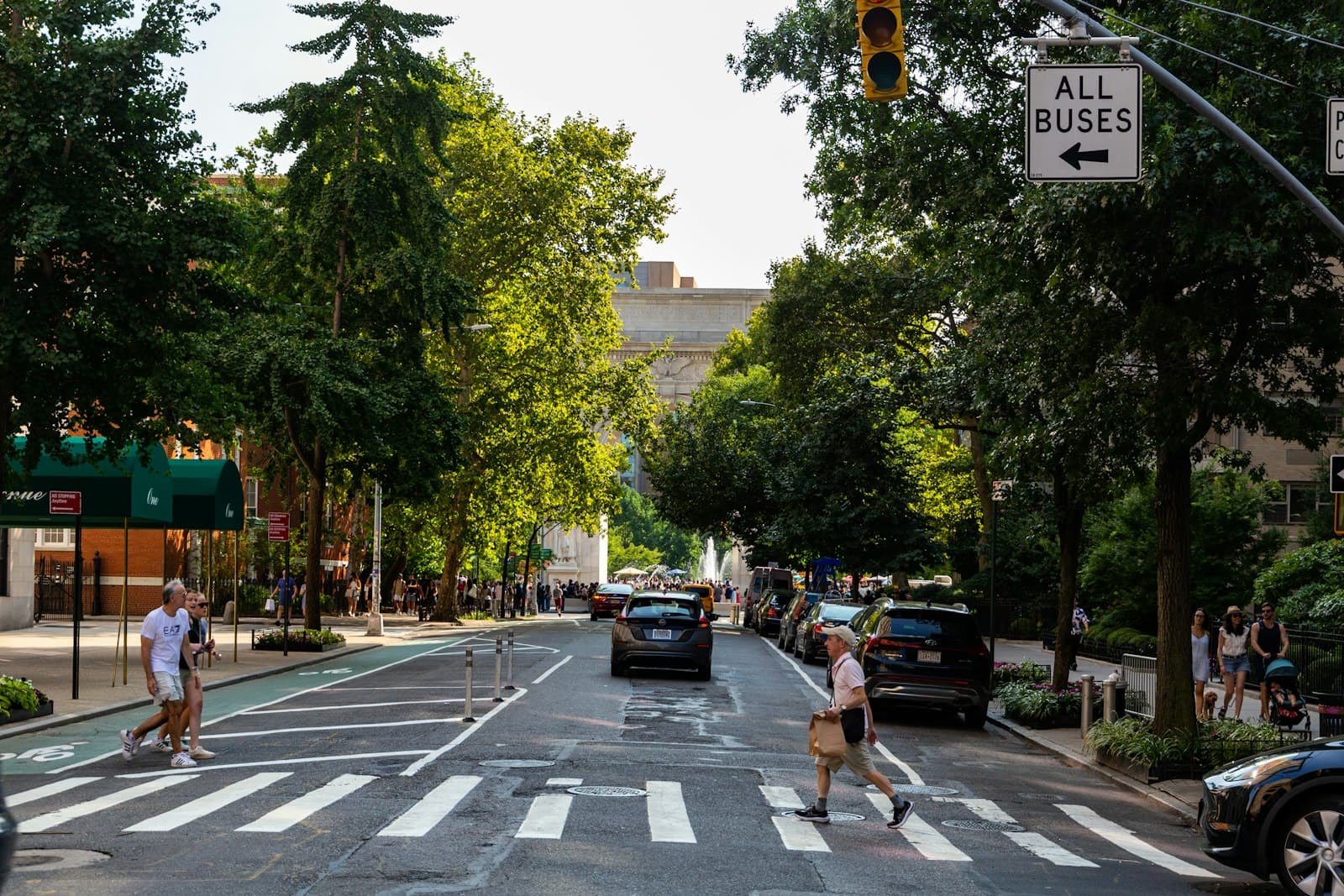
Walk a new route through your neighborhood
Turn down the streets you always pass and discover what's been hiding around the corner.
- Time:
- 45 min
- Cost:
- free
- Difficulty:
- easy
- Where:
- Outdoors
- Best:
- Solo
Most people use perhaps five percent of the streets within a mile of home, because routes ossify around destinations. To walk a new route through your neighborhood needs no destination at all, just a rule that overrides habit, and the result is regularly surprising in a place you thought you knew.
Why walk a new route through your neighborhood is worth an hour
A simple procedural rule removes the decision-making that would otherwise steer you back onto familiar ground. Walking a street you have only ever driven is a genuinely different experience too: at walking pace you see doorways, gardens, dates on buildings and shopfronts that are invisible at thirty miles an hour.
How to walk a new route through your neighborhood step by step
- 1
Pick a rule and follow it
Left at every junction, or first turning you have never taken. The rule replaces your habitual choices.
- 2
Set a time, not a destination
Twenty minutes out, then navigate home. Removing the destination is what makes it exploration.
- 3
Walk streets you have only driven
Walking pace reveals detail that driving completely erases. Start with your most-driven route.
- 4
Look above ground floor level
Old signage, building dates and original architecture survive above the shopfronts nobody looks past.
- 5
Follow anything that looks like a shortcut
Alleys, cut-throughs and footpaths between streets. These are the parts maps show poorly and locals never use.
Tips to get more out of it
- Take a phone for navigating home, but resist opening it until you start the return leg.
- Photograph anything you want to look up later. Building dates and odd street names are worth investigating.
- Vary the time of day as well as the route. The same streets are genuinely different places at seven in the morning and seven at night.
Ways to mix it up
If your area is small, extend the radius and treat it as a series of loops over several weeks. If you want a purpose, combine it with looking up the history of anything you find, which turns an aimless walk into an ongoing project.
Walk a new route through your neighborhood: frequently asked questions
How do I make a familiar area feel new?
Use a procedural rule such as turning left at every junction. It overrides the habitual choices that keep you on the same streets.
What should I look for?
Above ground floor level, where old signage, building dates and original architecture survive. Also alleys and cut-throughs.
Is it worth walking streets I drive regularly?
Particularly those. Walking pace reveals doorways, gardens and detail that driving completely erases.
Related activities
Outdoor
Visit a local park you've never been to
A visit to a new local park can be a short nature outing without a long journey.
Learning
Learn about local history
Research the stories behind landmarks, street names, and events in your area—you'll see your neighbourhood differently.
Outdoor
Try geocaching in your area
Use GPS coordinates to hunt for hidden containers outdoors—a real-world treasure hunt that combines tech and exploration.