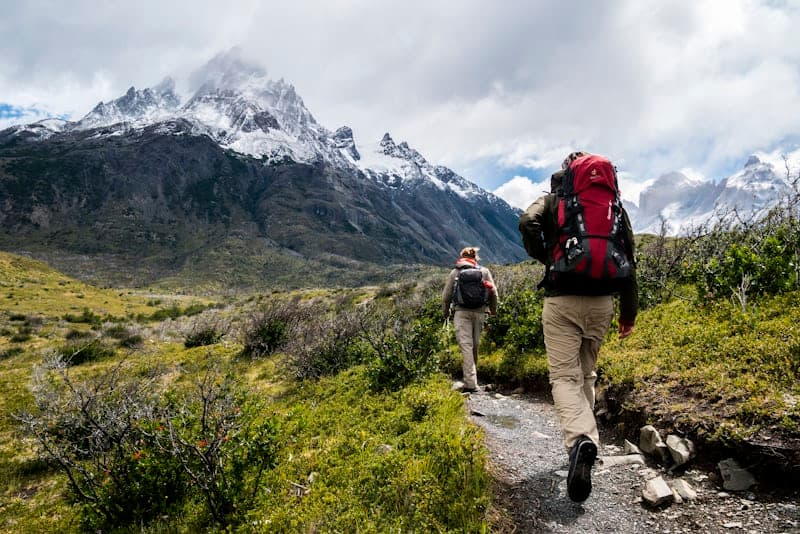
Explore a new hiking trail
Lace up your boots and tackle an unfamiliar trail to challenge your body, clear your head, and discover new scenery.
- Time:
- 60 min
- Cost:
- free
- Difficulty:
- moderate
- Where:
- Outdoors
- Best:
- Solo
When you explore a new hiking trail, the number that catches people out is not the distance, it is the ascent. Ten kilometers flat and ten kilometers with eight hundred meters of climbing are completely different afternoons. Checking that one figure before setting off prevents most of the situations where a walk becomes an ordeal.
Why explore a new hiking trail is worth an hour
Ascent dominates how long a route takes and how tired you get, which is why experienced walkers quote both figures. Downloading offline maps addresses the other common failure, since trails routinely run through areas with no phone signal and a map that will not load is worse than no map at all. Both take two minutes at home.
How to explore a new hiking trail step by step
- 1
Check ascent, not just distance
Total climb in meters is what determines difficulty. Ten flat kilometers and ten hilly ones are not comparable.
- 2
Download the map offline
Before you leave home. Trails frequently have no signal, and a map that cannot load is no map at all.
- 3
Tell someone your route and time
Where you are going and when you expect to be back. Free, and it is what makes a problem findable.
- 4
Check sunset and work backwards
Allow for being slower than planned. Finishing a descent in the dark is where most trouble starts.
- 5
Take more water and one more layer
Both are the things people underpack. Weather changes faster with altitude than most walkers expect.
Tips to get more out of it
- Read recent trail reports. Conditions, closures and washed-out sections change and official pages lag.
- Wear the boots in first. A new trail is a bad place to discover where a boot rubs.
- Turn back earlier than feels necessary if conditions change. The summit will still be there next month.
Ways to mix it up
If you are new to hiking, start with a waymarked circular route of a few kilometers rather than anything requiring navigation. If you hike often, try a trail in a different landscape type, since technique and pacing differ considerably between moorland, forest and coast.
Explore a new hiking trail: frequently asked questions
How do I judge if a trail is too hard?
Look at total ascent rather than distance. Climbing is what determines both the time it takes and how tiring it is.
What should I always take hiking?
Water, an extra layer, food, an offline map and a charged phone. Tell someone your route before you set off.
Do I need offline maps?
Yes. Trails often have no signal, and downloading the area beforehand takes a couple of minutes at home.
Related activities
Outdoor
Visit a nature reserve
To find a nature reserve near you, start with a UK reserve directory, then check the individual site’s access information.
Outdoor
Go for a bike ride in your neighborhood
Hop on a bike and cruise through your streets—great exercise, zero fuel costs, and a fresh perspective on familiar surroundings.
Learning
Learn to tie different knots
Master useful knots like the bowline, clove hitch, and figure-eight for camping, sailing, or everyday use.