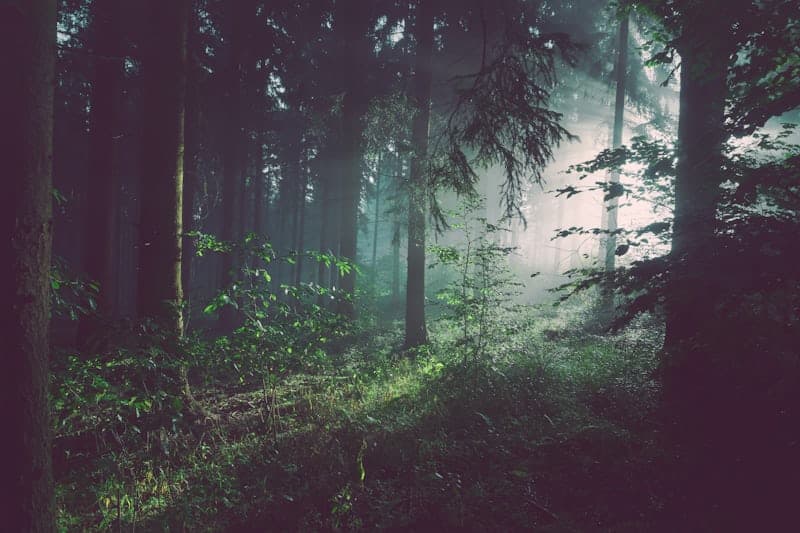
Try forest bathing (shinrin-yoku)
Immerse yourself in a woodland setting, engaging all your senses to absorb the calming, restorative power of nature.
- Time:
- 60 min
- Cost:
- free
- Difficulty:
- easy
- Where:
- Outdoors
- Best:
- Solo
When you try forest bathing, shinrin-yoku in Japanese, you are not taking a walk in the woods. The distinguishing feature is how little ground you cover: a genuine session might travel a few hundred meters in an hour. It is sensory attention in a woodland setting, and the slowness is what separates it from ordinary hiking.
Why try forest bathing (shinrin-yoku) is worth an hour
Moving slowly changes what is available to notice. At walking pace a wood is a green corridor; at forest bathing pace it becomes individually distinguishable trees, sounds, smells and light. Research on time in woodland and wellbeing is reasonably encouraging, though the specific mechanisms are debated more than popular accounts suggest.
How to try forest bathing (shinrin-yoku) step by step
- 1
Choose accessible woodland
It does not need to be remote or spectacular. A small local wood works entirely well.
- 2
Leave the phone away or silent
The practice is attention, and a phone is the single most reliable interruption to it.
- 3
Walk absurdly slowly
A few hundred meters in an hour. If you are covering distance, you are hiking rather than forest bathing.
- 4
Move through the senses in turn
Spend several minutes on sound, then smell, then touch. Deliberate rotation rather than general appreciation.
- 5
Sit still for the last twenty minutes
In one spot, doing nothing. The sitting is usually where the noticeable shift happens.
Tips to get more out of it
- Go in any weather. Rain and mist change a wood substantially and are often better than clear days.
- Touch things deliberately: bark, moss, leaves, stone. Texture is the sense that almost nobody uses on purpose outdoors.
- Tell someone where you are going if the wood is unfamiliar, and stay aware of the light and the time.
Ways to mix it up
If you have no woodland nearby, the same practice works in any green space, since the slowness and attention matter more than the tree species. If an hour is too long, twenty minutes of sitting still in one spot captures a surprising amount of it.
Try forest bathing (shinrin-yoku): frequently asked questions
What is shinrin-yoku?
A Japanese practice of slow sensory attention in woodland. It is distinguished from walking by how little ground is covered.
How far should I walk?
Very little: a few hundred meters in an hour is normal. Covering distance means you are hiking instead.
Does forest bathing have real benefits?
Research on woodland time and wellbeing is reasonably encouraging, though the mechanisms are debated more than popular accounts imply.
Related activities
Mindfulness
Try a walking meditation
Walk slowly and deliberately, paying close attention to each step and sensation to blend movement with mindfulness.
Outdoor
Take a walk in a nearby park and observe nature
Slow down and notice the trees, birds, and seasonal changes around you on a mindful stroll through your local park.
Mindfulness
Sit outside and just listen for ten minutes
Find a comfortable spot outdoors, close your eyes, and count how many distinct sounds you can hear.