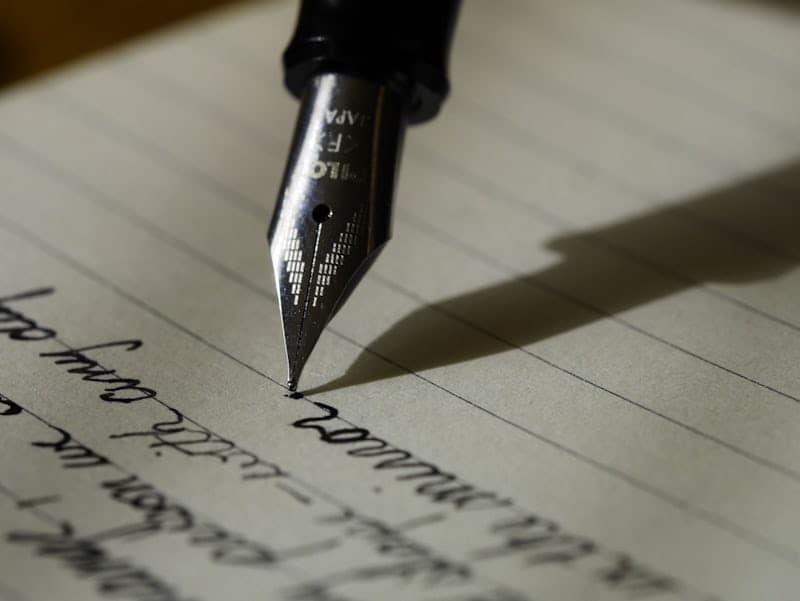
Learn basic calligraphy
Practice elegant lettering with a brush pen or nib to transform ordinary handwriting into beautiful art.
- Time:
- 60 min
- Cost:
- low
- Difficulty:
- moderate
- Where:
- Indoors
- Best:
- Solo
Beginners who learn basic calligraphy almost always start by attempting the alphabet, which is why the results look uneven. Letters are assembled from a small set of repeated strokes, and drilling those strokes for twenty minutes produces better letters than twenty minutes of writing letters badly.
Why learn basic calligraphy is worth an hour
The consistency that makes calligraphy look like calligraphy comes from repeating identical strokes, not from drawing each letter well. Pen angle is the other half: holding the nib at a fixed angle to the baseline is what creates the thick and thin contrast automatically. Both are mechanical and both are trainable within one session.
How to learn basic calligraphy step by step
- 1
Choose one style and stick to it
Italic, foundational or modern brush lettering. Mixing styles early prevents any of them consolidating.
- 2
Drill basic strokes first
Downstrokes, upstrokes, ovals, arches. Twenty minutes of these improves letters more than writing letters does.
- 3
Hold a consistent pen angle
Usually around forty-five degrees to the baseline. The angle produces the thick-thin contrast automatically.
- 4
Use guidelines
Ruled lines for height, slant and spacing. Consistency is what reads as skill, and guidelines supply it.
- 5
Go slowly and lift between strokes
Calligraphy is drawn rather than written. Speed comes much later, and rushing produces wobbles.
Tips to get more out of it
- Use smooth paper rather than textured. Rough paper catches the nib and feathers the ink, which looks exactly like a technique problem and is not.
- Pressure creates line thickness with a brush pen, while angle creates it with a broad nib. Do not confuse the two systems, since the technique differs entirely.
- Practice the same word repeatedly rather than working through pangrams. Repetition on one word is what actually builds the muscle memory.
Ways to mix it up
If dip pens seem daunting, brush pens are far more forgiving and need no ink handling. If you want the historical version, a broad-edge nib and a foundational hand teaches you where the letterforms actually came from.
Learn basic calligraphy: frequently asked questions
What should I practice first in calligraphy?
Basic strokes rather than letters. Downstrokes, upstrokes, ovals and arches make up every letter in most alphabets.
What pen should a beginner use?
A brush pen is the most forgiving start. Broad-edge nibs give the traditional look but require consistent angle control.
Why does my ink feather?
Usually the paper. Textured or absorbent paper spreads ink, so smooth paper is worth more than a better pen.
Related activities
Creative
Do some origami
The two basic origami folds are the valley fold, which closes the paper towards you, and the mountain fold, which closes it away from you.
Creative
Write a letter to a friend by hand
Slow down and put pen to paper — a handwritten letter is a small gift in a digital world.
Creative
Design your own greeting card
Create a personalised card for someone special using hand-drawn art, stickers, or digital design tools.